
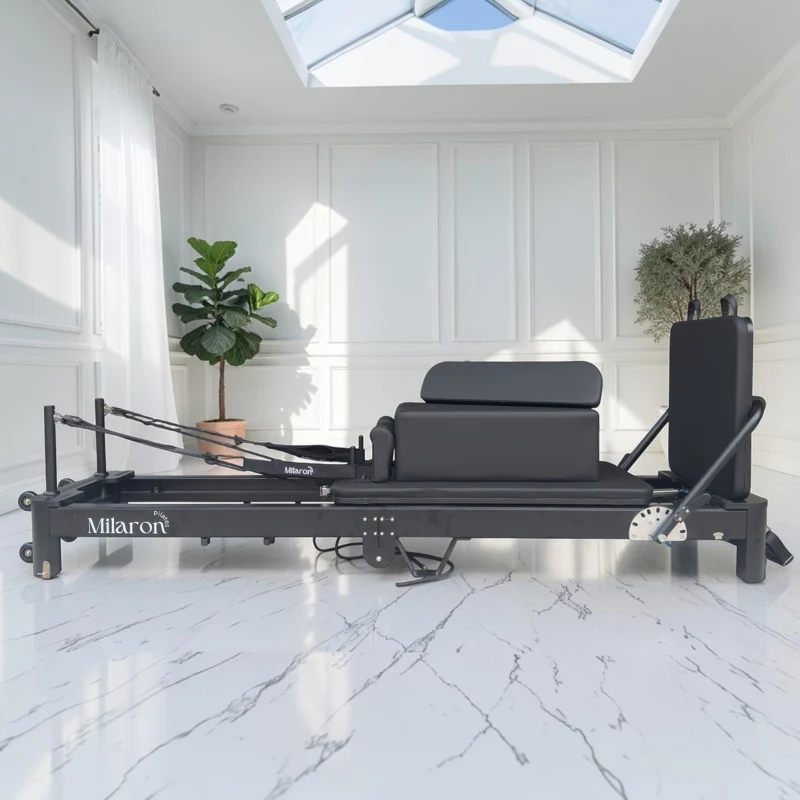
Short Box Versus Long Box Work on a Pilates Sitting Box
This guide breaks down what changes between them, why it matters, and how teachers and clients can choose the right option in a safe, practical way.
What is “short box” work on a Pilates sitting box?
Short box work is a series typically performed seated on the box with the feet supported, often under a strap, focusing on trunk control. When performed using a Pilates sitting box, it usually emphasises spinal articulation, upright posture, and deep abdominal support.
In Australian studios, short box is often taught on the Reformer with a box and foot strap, or adapted on the Mat with a box for height and feedback.
What is “long box” work on a Pilates sitting box?
Long box work generally places the body lengthways on the box, commonly prone, supine, kneeling, or seated facing different directions. On a Pilates sitting box, long box tends to train shoulder stability, hip extension, and full-body integration through longer lever positions.
Many Australian clinics and studios use long box sequences to build posterior-chain strength and improve scapular control for desk-based lifestyles.
How does body position change between short box and long box work?
The biggest change is orientation and leverage. Short box keeps them more upright with the pelvis anchored and the torso moving in controlled ranges, while long box positions them lengthways, often increasing lever length and loading through shoulders or hips.
On a Pilates sitting box, these shifts influence balance demands, muscle recruitment, and how much assistance is needed from straps, springs, or hands.
Which option builds better core strength?
Short box is often the more direct “core-first” choice because it asks them to stabilise the pelvis while moving the spine. Long box still trains trunk stability, but it frequently does so as part of shoulder and hip work rather than as the main event.
For many programs, combining both on a Pilates sitting box creates a more complete core outcome than choosing only one style.
Which option is better for posture and spinal mobility?
Short box is commonly used to improve seated alignment, thoracic mobility, and controlled spinal flexion or rotation. Long box can support spinal extension patterns and upper-back endurance, especially in prone work.
In practice, Australian teachers often pick short box when they want clearer spinal segmentation, and long box when they want stronger extension and shoulder mechanics.
How do props and straps affect short box work?
Short box frequently relies on a foot strap, a pole, or light hand support to reduce grip tension and help them organise their ribs over pelvis. Without a strap, many people compensate with hip flexors or brace through the jaw and shoulders.
On a Pilates sitting box, a strap can turn a shaky movement into a cleaner spinal pattern, particularly for beginners or rehab-focused sessions.
How do springs and load change long box work?
Long box often uses spring resistance more obviously, especially when they are pulling straps, pressing the carriage, or stabilising against movement. The load can shift quickly if their shoulder blades lose control or the ribs flare.
On a Pilates sitting box, a small spring change can be the difference between smooth posterior-chain work and a neck-dominant pattern.
What are the most common technique faults in short box work?
They often tuck too hard, grip with hip flexors, or collapse through the chest to “find” the abdominals. Another common fault is pulling on the strap with the feet, which can lock the pelvis and reduce true spinal movement.
When short box is taught well on a Pilates sitting box, the focus stays on length through the spine, calm breathing, and control rather than depth or speed.
What are the most common technique faults in long box work?
They often overuse the neck and upper traps, flare the ribs, or lose pelvic control when the legs lift or the arms pull. In prone work, some jam into lumbar extension rather than distributing extension through the thoracic spine and hips.
On a Pilates sitting box, strong setup cues usually matter more than adding reps, because small compensations become big under longer levers.
Who benefits most from short box work?
Short box can suit people who need better trunk organisation, improved sitting posture, or confidence with spinal articulation. It is often a good fit for those returning to movement after back pain episodes, provided it is scaled appropriately.
In many Australian settings, short box on a Pilates sitting box is used for office workers, new mums rebuilding deep support, and athletes refining trunk control.
Who benefits most from long box work?
Long box often suits people who need stronger scapular stability, hip extension strength, and endurance through the posterior chain. It can be valuable for runners, golfers, surfers, and anyone whose daily posture lives in flexion.
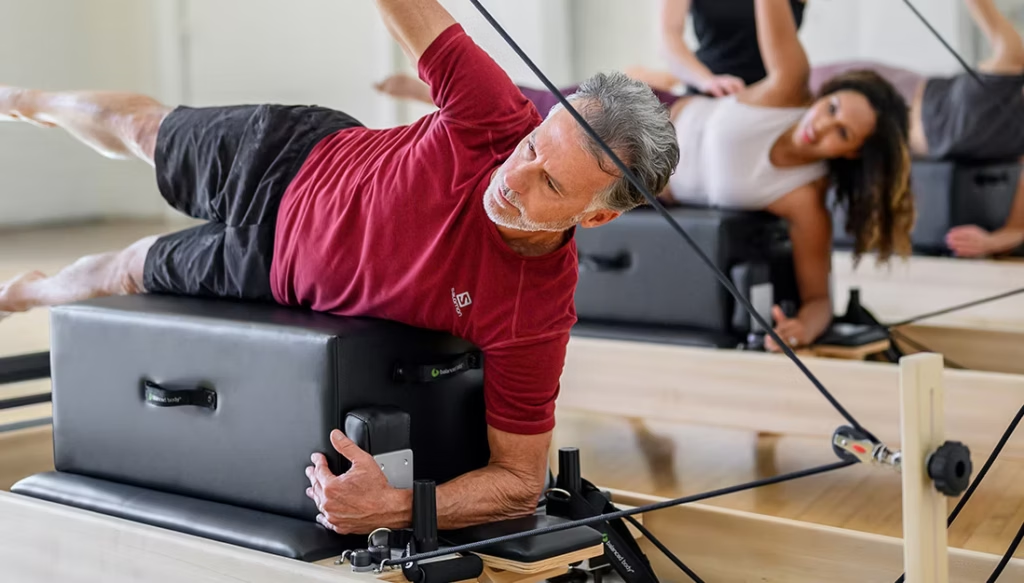
Across Australia, long box work on a Pilates sitting box is also popular in small-group reformer classes, with reformer Pilates exercises offering clear progressions and variety.
Which option is safer for low back sensitivity?
It depends on their triggers and how it is coached, but short box is often easier to scale because the load is smaller and the range can be reduced. Long box can be very back-friendly too, especially when it improves hip extension and thoracic extension, but poor setup can aggravate compression.
On a Pilates sitting box, the safer choice is usually the one they can do without breath-holding, rib flare, or gripping.
Which option is safer for shoulder or neck issues?
Short box typically places less demand on shoulders because the arms can be supported with a pole or kept relaxed. Long box can be excellent for shoulder rehab when controlled, but it can also provoke symptoms if they substitute with neck tension.
In Australian rehab studios, teachers often introduce long box gradually on a Pilates sitting box, prioritising scapular timing before heavier pulling work.
How do teachers choose between short box and long box in a class plan?
Teachers usually start with the goal of the session, then choose the box series that supports it. If the goal is spinal control and seated posture, short box is often first. If the goal is shoulder stability and posterior chain, long box usually leads.
In mixed-ability Australian classes, they may alternate weeks, or pair a short box spinal series with a long box strength series for balance.
What does progression look like for beginners?
Beginners usually need simpler levers, fewer moving parts, and clearer landmarks. Short box can start with small ranges, hands behind thighs, or a pole for feedback. Long box can begin with supported positions and lighter springs, focusing on scapular stability and breath.
On a Pilates sitting box, progression should look like better control, not just bigger movement.
What does progression look like for advanced clients?
Advanced clients can handle more load, longer levers, and more complex coordination. Short box can progress into deeper hinge work, stronger rotation control, and longer time under tension. Long box can progress into heavier pulling, more demanding prone patterns, and cleaner hip extension without lumbar dominance.
Even at advanced levels, Australian teachers often keep the same principle: precision first, intensity second.
How should the box be set up to reduce risk?
They should ensure the box is stable, aligned, and appropriate for their height, with clear foot placement and a non-slip surface. If the Reformer is used, the box must be secure, and springs should match the exercise rather than ego.
On a Pilates sitting box, good setup often prevents the most common issues: sliding, over-gripping, and uncontrolled range.
How can they decide what to do at home versus in-studio?
At home, simpler short box variations can be safer because they require less equipment and fewer moving parts. Long box work can still be done at home, but it needs careful attention to neck position, shoulder control, and stable surfaces.
For many Australians, the best approach is learning both styles in-studio first, then practising scaled versions on a Pilates sitting box at home.
What are practical cues that help most people immediately?
They often improve quickly with cues that reduce strain and clarify alignment. For short box, teachers may cue “sit tall, soften the ribs, move from the waist, keep the breath flowing.” For long box, cues like “shoulder blades wide, neck long, ribs heavy, legs reaching” can clean up patterns fast.
On a Pilates sitting box, the most effective cue is usually the one that makes the movement quieter.
How can they choose short box versus long box based on their goal?
If their goal is spinal control, seated posture, and deep abdominal timing, short box is often the priority. If their goal is stronger shoulders, better hip extension, and full-body integration, long box is often the priority.
When they can, mixing both across the week usually delivers the best outcomes on a Pilates sitting box, because each fills gaps the other leaves behind.
What is the simplest takeaway for short box versus long box work?
Short box tends to be spine-led and organisation-focused, while long box tends to be strength-and-integration focused through longer levers. Both can be scaled, both can be challenging, and both can be valuable in Australian studios and homes.
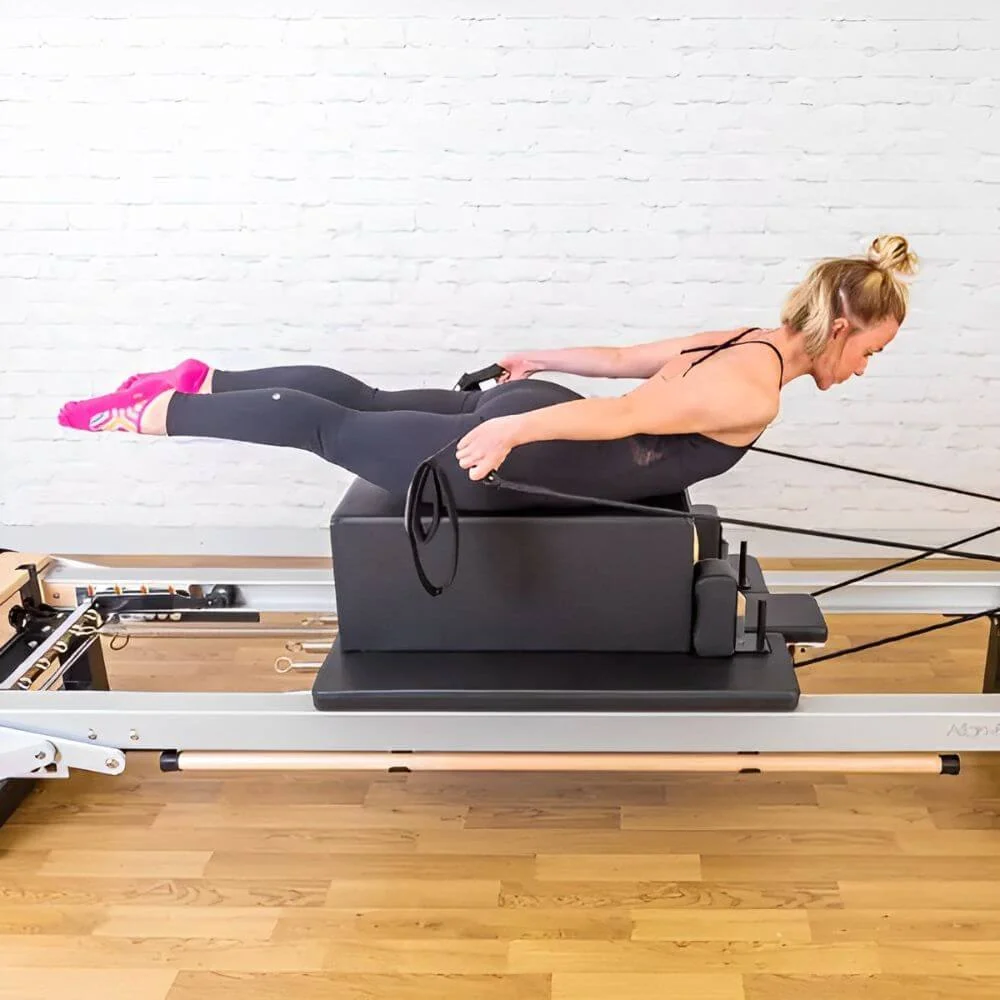
Used well, short box versus long box work on a Pilates sitting box is less about which is “better” and more about what their body needs most right now.
FAQs (Frequently Asked Questions)
What is the difference between short box and long box work on a Pilates sitting box?
Short box work involves sitting upright on the box with feet supported, focusing on spinal articulation, upright posture, and deep abdominal support. Long box work places the body lengthways on the box in various positions to train shoulder stability, hip extension, and full-body integration through longer lever positions.
Which Pilates sitting box method is better for building core strength?
Short box work is often more direct for core strengthening as it requires stabilising the pelvis while moving the spine. Long box also trains trunk stability but usually as part of shoulder and hip work. Combining both methods can create a more complete core strength outcome.
How do body positions differ between short box and long box Pilates exercises?
Short box keeps the practitioner more upright with pelvis anchored and controlled torso movement, emphasizing spinal articulation. Long box positions the body lengthways, increasing lever length and loading through shoulders or hips, which changes balance demands and muscle recruitment.
What are common technique faults in short box Pilates exercises on a sitting box?
Common faults include excessive pelvic tucking, overusing hip flexors, collapsing through the chest to find abdominals, and pulling on foot straps which locks the pelvis and reduces true spinal movement. Proper technique focuses on spinal length, calm breathing, and control rather than depth or speed.
Who benefits most from short box versus long box Pilates work?
Short box suits individuals needing improved trunk organisation, sitting posture, or spinal articulation confidence—such as office workers, new mums rebuilding support, or those recovering from back pain. Long box benefits those requiring stronger scapular stability, hip extension strength, and posterior chain endurance like runners, golfers, or surfers.
Which Pilates sitting box option is safer for people with low back sensitivity or shoulder issues?
Safety depends on individual triggers and coaching quality. Short box is generally easier to scale with smaller load and reduced range of motion. Long box can be back-friendly when improving hip and thoracic extension but requires proper setup to avoid compression. For shoulders and neck issues, short box typically places less demand on shoulders; long box can aid rehab if controlled but may provoke symptoms if neck substitution occurs.
<script type="application/ld+json">
{
  "@context": "https://schema.org",
  "@type": "BlogPosting",
  "mainEntityOfPage": {
    "@type": "WebPage",
    "@id": "https://ibreastcheck.com/short-box-versus-long-box-work-on-a-pilates-sitting-box/"
  },
  "headline": "Short Box Versus Long Box Work on a Pilates Sitting Box",
  "image": [
    "https://ibreastcheck.com/wp-content/uploads/2026/09/3f702c_253422611f5b4674abe17d17dd1314bemv2.avif",
    "https://ibreastcheck.com/wp-content/uploads/2026/09/milaron-pearl-v3-foldable-pilates-reformer-machine-noir-side-withplatform.webp",
    "https://ibreastcheck.com/wp-content/uploads/2026/09/533a288a-6401-4c7b-9ad3-e8b689c285f4_2_1_1445x.webp"
  ],
  "author": {
    "@type": "",
    "name": "Samuel Lawrence",
    "url": "https://ibreastcheck.com/author/admin/"
  },
  "publisher": {
    "@type": "Organization",
    "name": "I Breast Check",
    "logo": {
      "@type": "ImageObject",
      "url": "https://ibreastcheck.com/wp-content/uploads/2025/08/logo4.png"
    }
  },
  "datePublished": ""
}
</script>